

Ask guests to describe a truly premium hotel stay and they rarely mention one big thing. They describe an accumulation: the room was ready early, the lighting felt right, someone remembered the coffee order, the shower was instantly hot, nothing hummed in the night, and when a small thing went wrong it was fixed before it became a story. Premium experience is not a moment of theatre — it is the near-total absence of friction, punctuated by moments of genuine recognition.
That is good news for operators, because friction and recognition are both manageable. This guide breaks the premium guest experience into its working parts — anticipation, arrival, the room itself, sensory consistency, recognition and recovery — and looks at what each one demands operationally.
Anticipation: the experience starts before arrival
Luxury guests begin judging the property at the booking confirmation. A premium pre-arrival experience is short on marketing and long on usefulness: a warm confirmation that reads as if a person wrote it, a note asking whether the property can prepare anything — pillow preference, arrival time, occasion — and clear practical guidance on parking, transfers and check-in.
Anticipation is also the cheapest personalisation channel a hotel has. Every preference gathered before arrival is work moved from the corridor to the office: the firm pillow already on the bed, the sparkling water already in the minibar, the cot already made up. Guests experience this as near-telepathy; operationally, it is simply information captured early and acted on once.
Arrival: the fifteen minutes that frame the stay
Arrival is when the guest is paying closest attention, and the premium standard is quiet efficiency with a human face. The name used naturally, the paperwork minimal, the room genuinely ready — and ready means inspected, not just cleaned. A luxury guest walking into a room where the safe is locked shut, the hair dryer is missing or the kettle is furred with limescale has learned everything they need to know about the gap between the brand and the operation.
The escort to the room, where the property offers one, should be an orientation rather than a tour: where the light controls are, how the temperature works, how to reach someone at 2am. Premium guests do not want to study a compendium to operate the room. They want the room to be obvious — and everything that is not obvious explained once, gracefully.
The room: where most of the experience actually happens
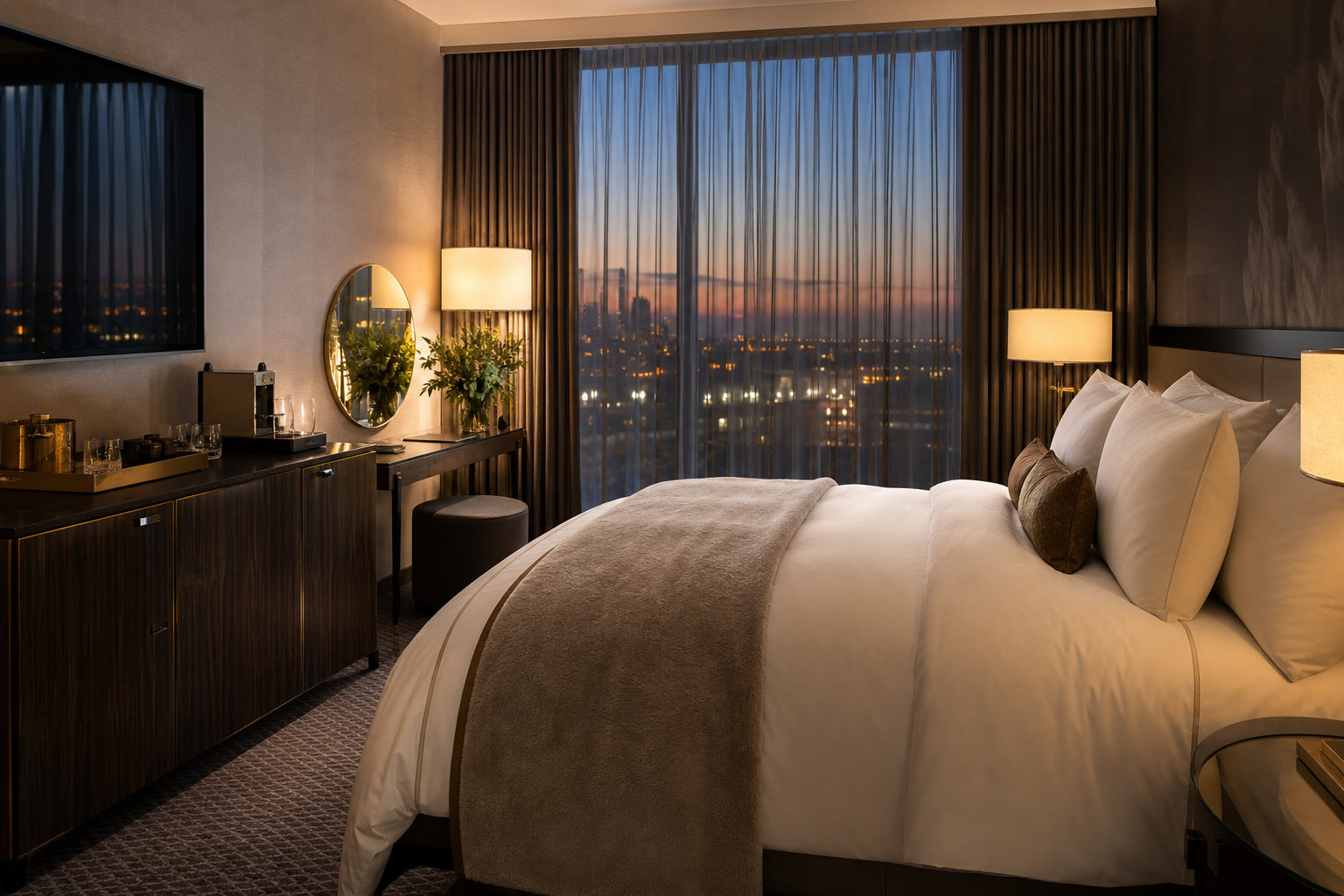
Guests spend more of their stay in the room than in every other part of the property combined, most of it unobserved by any member of staff. This is why the room is the truest test of a premium operation — it has to deliver the experience on its own. The elements that carry the weight:
- The bed — a quality mattress, layered linen, and a pillow choice rather than a pillow decree.
- The bathroom — instant hot water, strong pressure, generous towels, and lighting a person can actually get ready by.
- Working equipment, without exception. The kettle boils fast and clean, the minibar is cold and stocked, the safe opens first time, the hair dryer has real power, the iron and board are pristine. Any single failure here costs more goodwill than the item costs to replace.
- Order and clarity — surfaces clear, controls comprehensible, everything the guest might look for exactly where instinct says it should be.
Note how much of that list is procurement and maintenance rather than service. A premium experience is specified long before it is delivered, which is why serious operators treat in-room equipment as a brand decision. Consistent, reliable appliances across the estate — the kind of kit in Roomwell's guest-room collection — mean every room makes the same promise and keeps it.
The senses: what premium feels like at 3am
Luxury is registered by the senses before it is processed by judgement, and the sensory standard is most exposed at night. Three senses do most of the work:
- Sound. The premium room is quiet in a way guests notice without naming: solid doors, soft-close hardware, and — critically — silent appliances. A humming minibar compressor is the classic 3am complaint; silent absorption cooling removes it at the specification stage. Corridor noise discipline from the team does the rest.
- Light. Warm, layered, controllable lighting in the evening; true blackout at night, with no glowing standby LEDs left to pierce it; and an easy path to a gentle light for the guest who wakes at 4am.
- Touch and air. Linen with real weight, towels with real thickness, and a room temperature the guest can set and trust to hold.
Scent deserves a line of its own: the premium standard is not a signature fragrance but the complete absence of the wrong smells — damp, drains, last week's smoke. Neutral and fresh beats perfumed and masking, every time.
Recognition: being known without being watched
The emotional core of premium hospitality is recognition — the sense of being a person the property knows rather than a room number it processes. Recognition is built from small, recorded facts used gracefully: the returning guest given "their" room type without asking, the tea they ordered last time on the tray this time, the anniversary acknowledged with a card.
The operational machinery is unglamorous: a guest profile that staff actually update, a daily briefing where arrivals are discussed as people, and the authority for any team member to act on what they learn. The distinction that keeps recognition welcome is simple — use what the guest gave you, in their bookings, requests and conversations, and never what you went looking for elsewhere. One feels like memory; the other feels like monitoring.
Recovery: the premium response to imperfection
Things go wrong in the best properties — a delayed room, a failed appliance, a noisy neighbour. What separates premium operations is that they treat recovery as a designed experience rather than an improvised apology. The pattern is consistent: the problem is acknowledged immediately and without defensiveness, fixed faster than the guest expected, and followed up by a human being who checks the fix held.
Empowerment is the operational key. If the night manager can move a guest, send an amenity or adjust a bill without waking anyone, recovery happens at the speed of the problem. Handled this way, a failure recovered brilliantly often leaves a stronger impression than a stay with no failure at all — guests remember how a property behaves under pressure far longer than they remember flawlessness.
Consistency is the brand
Every element above is achievable on a good day. The premium operator's real discipline is delivering them on the bad days — full house, short-staffed, third coach arrival of the afternoon. That consistency comes from standards written down and audited, equipment specified for hard daily use rather than showroom appeal, and a culture where the 3am details are owned as seriously as the lobby flowers. Guests cannot see any of that machinery. They just feel that everything, always, simply works — which is the entire product.
Quick answer: Premium guest experience is not one grand gesture — it is a hundred small certainties. Here is how luxury hotels engineer anticipation, consistency and recovery into every stay.
Benefits
- Thoughtful amenities convert arrival into a personal welcome.
- Tiered amenities control cost while protecting VIP impact.
- In-room essentials reduce requests and friction.
- Consistent presentation supports brand photography and reviews.
Features
- Core kit: tray, dryer, safe, towels and toiletries.
- Optional VIP layers: welcome notes, local produce, upgraded consumables.
- Room-readiness checks before amenity placement.
- Allergy-aware and preference-aware delivery rules.
Frequently asked questions
What is a welcome amenity really for?
To show the guest they were expected — personalisation and timing matter more than cost.
Should every VIP get the same amenity?
No. Tier by occasion, loyalty and value so generosity stays sustainable.
What room conditions must be ready before amenities?
Clean bathroom, made bed, working appliances, chilled/clean fridge or minibar, and correct temperature/lighting.
Which amenities are now considered baseline?
Wi-Fi, kettle tray, hair dryer, towels and a clean bathroom kit in most UK hotels.
Roomwell supplies the in-room equipment behind that consistency — silent minibars, fast kettles, safes, hair dryers and hospitality accessories — to hotels across the UK. Browse the range in our Roomwell products collection, or contact our team to build a guest-room standard your brand can keep.