

Hotels invest enormous energy in the moments they can choreograph: the greeting at the desk, the styling of the lobby, the plating at breakfast. Yet the largest share of a guest's stay happens where no staff member is present at all — inside the room, alone, with the door closed. That is where satisfaction is actually decided, and it is why the room deserves to be treated as the hotel's primary product rather than its backdrop.
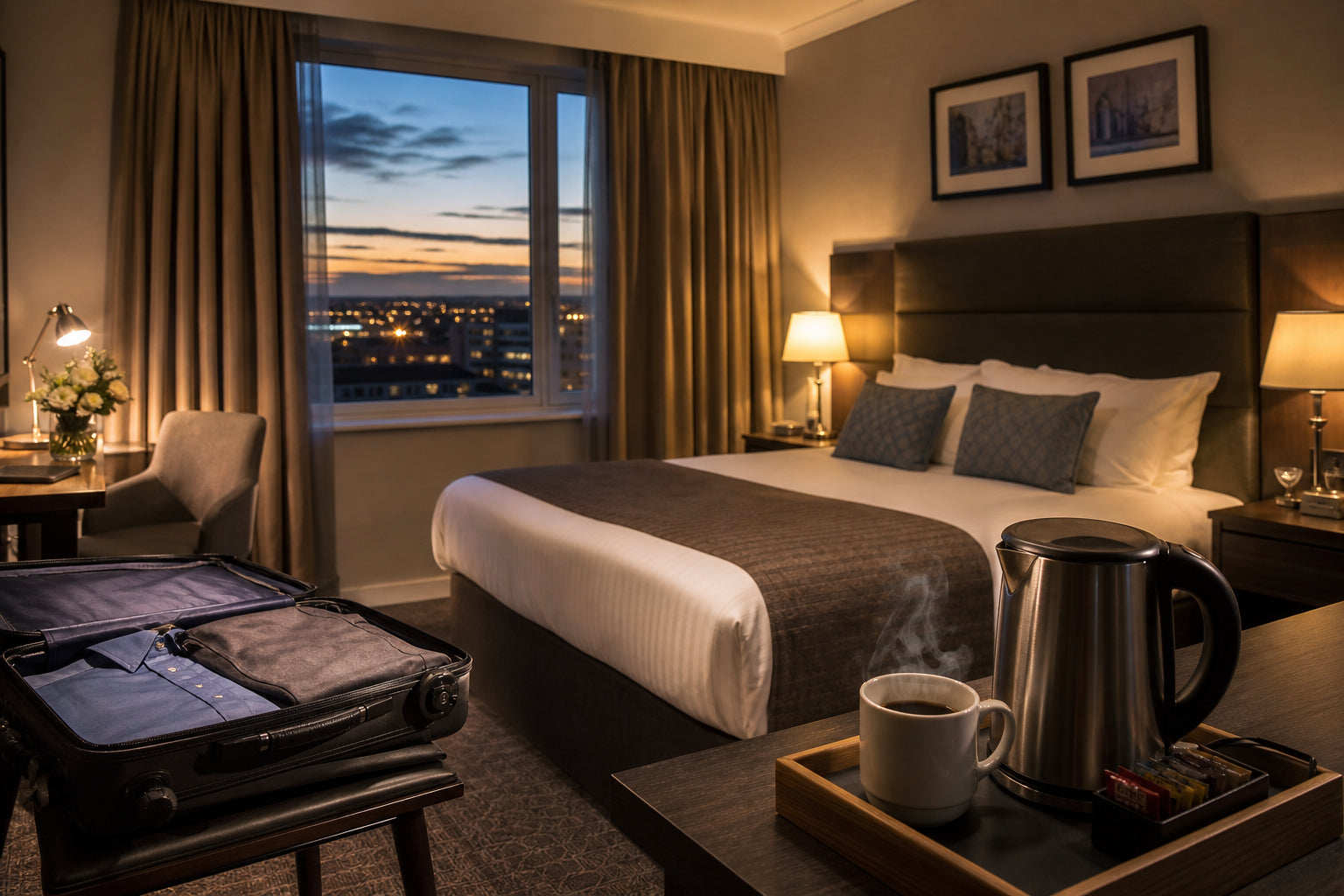
This article examines the room's role in guest satisfaction from an operator's perspective: why the room dominates the guest's judgement, which room factors move satisfaction most, how room failures surface in reviews, and where effort pays back fastest.
Why the room dominates the verdict
Three characteristics give the guest room its outsized influence on satisfaction. First, time: guests typically spend more waking and sleeping hours in the room than in every other hotel space combined, so the room simply accumulates more experience — good or bad — than anywhere else.
Second, intimacy: the room is where guests are at their most unguarded. They sleep there, wash there, work there in their own clothes and at their own pace. Judgements formed in that state are more personal and more durable than impressions formed in public spaces.
Third, testability: the room is full of things the guest personally operates. They boil the kettle, run the shower, test the mattress, open the safe, plug in their charger. Each interaction is a small experiment on the hotel's competence, and unlike the lobby's chandelier, every experiment produces a result the guest can feel.
The satisfaction hierarchy inside the room
Not everything in the room moves satisfaction equally. Operators who study their own feedback tend to find a consistent hierarchy at work.
At the base sit the sleep factors: bed comfort, quiet and darkness. A guest who slept badly is very hard to satisfy with anything else the property does; a guest who slept well forgives a great deal. Noise deserves particular attention because so much of it is self-inflicted — humming minibar compressors, rattling air conditioning, slamming corridor doors — and therefore fixable through specification rather than construction.
Next come the function factors: the shower's temperature and pressure, the room's warmth or cooling, and the working order of everything the guest handles — kettle, hair dryer, safe, television, sockets. These are pass–fail in the guest's mind. Nobody praises a working kettle, but a broken one features in the review.
Then the sufficiency factors: enough towels, enough hangers, enough sockets, milk on the tray, space for the suitcase. Shortfalls here read as carelessness, which contaminates the guest's interpretation of everything else.
Only at the top sit the delight factors: the view, the design flourishes, the welcome touches. They lift a satisfied guest towards advocacy — but they cannot rescue a stay that failed further down the hierarchy.
How room problems become review problems
Room failures have a distinctive behaviour in feedback: they generalise. A guest who finds one broken amenity rarely reports "one item was faulty." They report "the room was tired" or "the hotel is slipping" — the single data point becomes a verdict on the property. This happens because guests use small observable failures as proxies for everything they cannot inspect, from kitchen hygiene to management competence.
The reverse dynamic is equally powerful and much cheaper than most delight programmes. A room in which everything simply works — every switch, every appliance, every expected item present — generates a diffuse impression of professionalism that lifts scores across categories, including ones the room has nothing to do with. Operators frequently discover that "friendly staff" ratings rise when room defects fall, because a guest who is not compiling grievances meets every interaction more warmly.
There is also a timing effect worth noting: problems discovered in the first thirty minutes do disproportionate damage. The arrival window is when the guest is actively forming their verdict, and a dead kettle or missing hair dryer discovered then anchors the entire stay. The same fault discovered on day three lands far more softly.
Where operator effort pays back fastest
Taking the hierarchy and the review dynamics together, a clear order of operations emerges for any property wanting to lift satisfaction through its rooms:
- Eliminate in-room failures first. Every guest-discovered fault is a satisfaction event. Function-check appliances at turnover, descale kettles on schedule, and treat the second failure of any item as a replacement decision, not a repair.
- Buy quiet. Specify silent minibars, maintain air conditioning before it rattles, and fit soft-closing hardware where budgets allow. Sleep quality is the deepest root of the score.
- Guarantee sufficiency. A written per-room amenity specification, restocked against a checklist, removes the entire "missing things" category of complaint at almost no cost.
- Standardise across the estate. Satisfaction is a repeat-visit judgement too. A returning guest given a different, worse-equipped room than last time experiences it as decline. Identical equipment in identical categories protects the memory that drives rebooking.
- Add delight last. Once the foundations hold, small touches compound; before then, they are decoration on an unstable structure.
Most of this list is procurement and process rather than capital works — which is precisely why the room is such an efficient lever on satisfaction. Operators reviewing their in-room equipment against this list can specify replacements and standardised kit from the Roomwell products collection.
Satisfaction as a room-led strategy
None of this diminishes the value of warm service or a good breakfast. But the evidence of guests' own behaviour — where they spend their time, what they test, what they write about — points to a clear conclusion: the room is the product, and satisfaction is a room-led outcome. Properties that internalise this stop treating room standards as a housekeeping detail and start treating them as their principal commercial strategy.
The encouraging part is how actionable that strategy is. Sleep, function, sufficiency, consistency: each is a matter of specification, equipment and daily discipline — all within an operator's direct control, at every tier of the market.
Quick answer: Lobbies impress and restaurants delight, but satisfaction is decided in the room — where guests spend the most time and form their most durable judgements. Here is how the room drives the score.
Benefits
- Helps hotels and travellers act on: Lobbies impress and restaurants delight, but satisfaction is decided in the room — where guests spend the most time and form their most durable judgements. Here is how the room drives the score.
- Turns vague hospitality advice into practical room-level decisions.
- Supports better guest satisfaction through clearer standards.
- Connects room presentation, appliances and operations in one framework.
Features
- Operator-focused guidance for UK hospitality rooms.
- Clear standards guests can feel on arrival.
- Checklist-style points teams can train against.
- Links between guest comfort and equipment reliability.
Frequently asked questions
What is the key takeaway from “The Role of Guest Rooms in Hotel Guest Satisfaction”?
Lobbies impress and restaurants delight, but satisfaction is decided in the room — where guests spend the most time and form their most durable judgements. Here is how the room drives the score.
Why do in-room details matter so much?
Because guests judge the whole hotel through sleep, bathroom cleanliness and whether everyday appliances work.
How should hotels prioritise upgrades?
Fix foundations first — bed, bathroom, noise and reliable appliances — before decorative extras.
Where can operators find suitable guest-room equipment?
Browse Roomwell’s hospitality collections or contact the team for specification support.
Roomwell supplies UK hotels with the in-room equipment that satisfaction depends on: quiet minibars, reliable kettles, capable hair dryers, safes, ironing equipment and room accessories chosen for hospitality use. Browse the Roomwell range, or contact our team to talk through equipping your rooms for better scores.