

Butler service is one of the clearest dividing lines between a very good hotel and a genuinely luxurious one. It is also one of the most misunderstood. Guests often imagine a figure in tails hovering by the door; operators sometimes imagine an unaffordable payroll line. In practice, modern butler service is a structured, well-drilled discipline — and much of what makes it feel effortless happens before the butler ever knocks, in the way the room itself is designed, stocked and equipped.
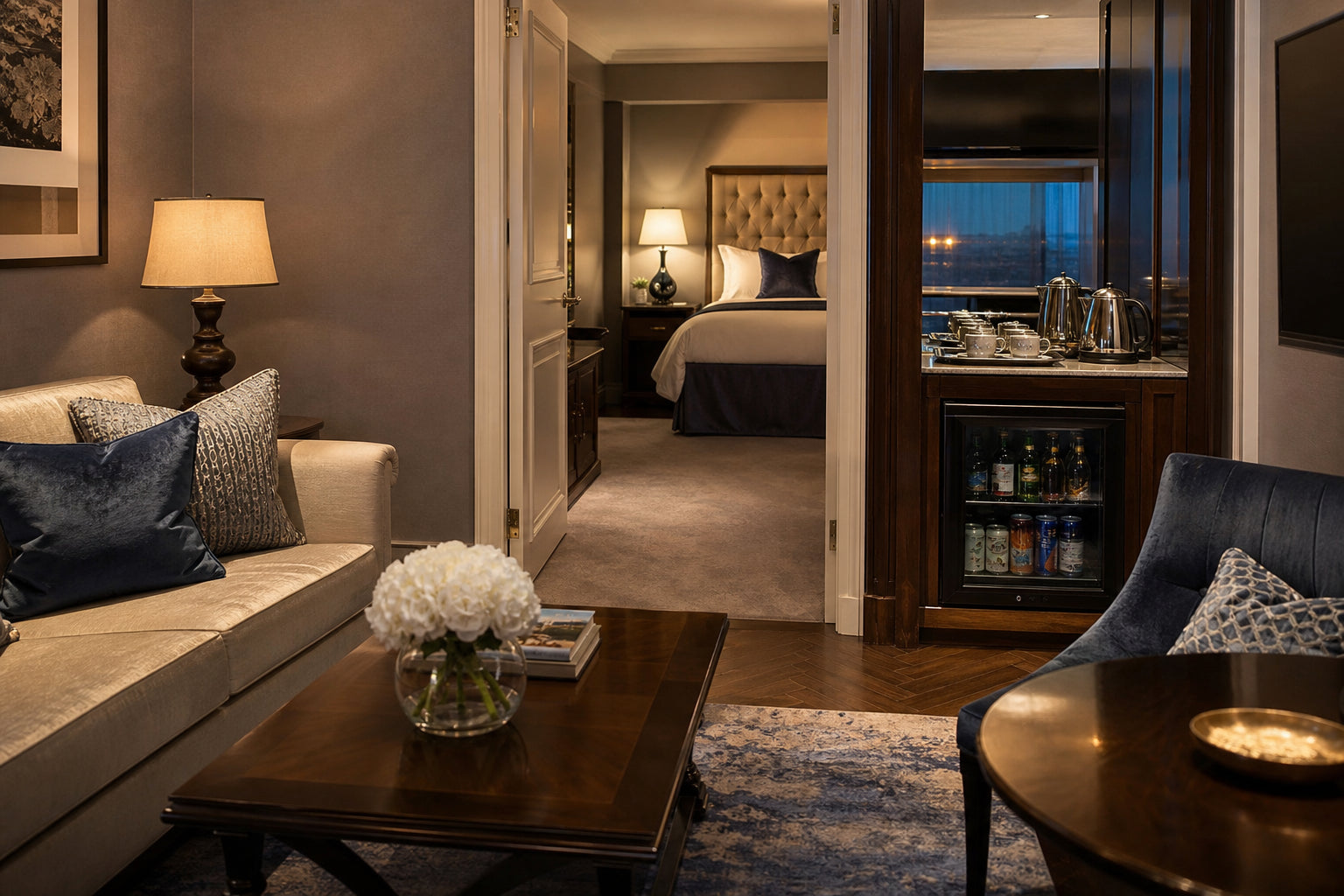
This guide looks at how butler service and VIP room service actually work in luxury and five-star hotels, what separates them from standard room service, and — crucially for operators and procurement teams — what the guest room needs in place for the service to land. A butler cannot deliver a flawless in-room tea ritual with a scaled domestic kettle, and a midnight VIP amenity loses its magic next to a humming, half-empty minibar.
What butler service actually means today
In its modern form, butler service is a single, named point of contact who takes ownership of a guest's entire stay. Rather than the guest calling housekeeping for one thing, room service for another and the concierge for a third, the butler coordinates all of it — and, in the best operations, anticipates most of it before it is asked for.
Typical elements of a contemporary butler programme include:
- Arrival and orientation. The butler escorts the guest to the room, explains its features, and handles check-in formalities in-room where the brand allows it.
- Unpacking and packing. Offered rather than imposed; many guests decline, but the offer itself signals the tier of service.
- In-room refreshment rituals. A welcome tea or coffee service, evening turndown with a drink or amenity, and personalised minibar stocking based on stated or observed preferences.
- Coordination. Pressing, shoe care, restaurant bookings, transport and wake-up arrangements, all routed through one person.
- Discretion. Perhaps the defining trait — the service appears exactly when wanted and is invisible otherwise.
Not every property offering butler service assigns one butler per suite. Many run a butler desk or team model, where a small trained pool covers a floor of suites. The guest experience of a single accountable contact is preserved; the economics become workable for more properties.
VIP room service: beyond the standard tray
Standard room service is transactional: the guest orders, the kitchen prepares, a tray arrives. VIP room service is anticipatory and staged. The distinction shows in a handful of consistent practices found across luxury properties:
- Pre-arrival preparation. Preferences gathered at booking — allergies, favourite drinks, still or sparkling water — are set up in the room before the guest arrives, not offered afterwards.
- In-room table service. Rather than leaving a tray, staff lay a table or desk properly, serve the first course or pour the first drink, and return to clear at an agreed time.
- Amenity programmes. Tiered welcome amenities — fruit, chocolates, a bottle on ice — matched to the guest's status, occasion or booking channel.
- Timing control. Deliveries scheduled around the guest's day, with turndown, pressing returns and late refreshments slotted in when the room is empty where possible.
None of this is complicated in isolation. What makes it luxury is consistency: the same standard at 6am and 11pm, on the first night and the fifth, whether the guest is in a signature suite or an entry-level room flagged as a VIP booking.
The room has to carry the service
Here is the part procurement teams control directly: butler and VIP service are only as good as the room equipment behind them. The service moments listed above all depend on physical infrastructure inside the guest room, and gaps show up immediately at this level of scrutiny.
Consider what each ritual actually requires:
- The welcome drink and tea ritual need a quality kettle and a properly presented hospitality tray — matched cups, fresh accompaniments, a surface that looks intentional rather than improvised.
- Personalised minibar stocking needs a minibar with genuine capacity, stable cooling and — critically in suites where guests sleep near it — quiet operation. An absorption minibar that runs silently lets the butler stock chilled items in the bedroom itself without creating a noise complaint at 2am.
- Welcome amenities on ice need chilled storage that holds temperature reliably, plus glassware and space to stage the presentation.
- Pressing and wardrobe service assume a decent ironing board and iron in the room for the guest's own use between visits, and a wardrobe laid out for unpacked luggage.
- In-room dining needs a clear, sturdy surface and discreet waste handling — a quality bin the guest never has to think about.
When any of these is under-specified, the service team compensates with workarounds — carrying kit up from the back of house, apologising for the minibar hum, decanting ice from buckets that melt before midnight. The guest may not name the missing equipment, but they feel the seams in a service that is supposed to be seamless.
Making VIP standards work at scale
Full butler programmes suit a minority of UK properties, but the underlying standards scale down well. A four-star hotel or serious independent can adopt VIP room-service practices without butler payroll, provided the rooms are equipped consistently. The practical route is to define a VIP room standard and audit against it, exactly as you would a brand standard for bedding or bathrooms.
An operator checklist for a VIP-ready room:
- Minibar cools to specification, runs quietly enough for a light sleeper, and is stocked to a documented plan — with a recorded process for personalised requests.
- Hospitality tray complete and presented identically in every VIP room: kettle descaled and tested, cups matched, accompaniments fresh and generous.
- Welcome amenity staged before arrival, with chilled items actually chilled and glassware polished.
- Iron and ironing board present, clean and in working order; safe tested and reset; hair dryer checked.
- A named contact communicated to the guest — even without a butler title, one accountable person changes how the stay feels.
- Clearing and turndown times agreed with the guest rather than imposed.
The pattern across all of these is the same: decide the standard, equip every relevant room to it, and make it inspectable. Service recovery is expensive and visible; specification is cheap and invisible. Luxury operations spend on the second to avoid the first.
Where to invest first
If you are building towards butler-style service, the highest-return investments are the ones guests touch during service moments. In order of impact for most properties:
- The minibar. It anchors the welcome amenity, the personalised stocking and the late-night refreshment. Capacity, cooling stability and silence are the three specification points that matter; in bedrooms and studio suites, silence is not optional.
- The hospitality tray and kettle. The most-repeated ritual of any UK stay. A fast, clean-boiling kettle and a coherent tray presentation carry the daily service load between staff visits.
- Wardrobe and garment care. Ironing equipment and sensible wardrobe fit-out support the pressing and unpacking services without back-of-house round trips.
- Safes and in-room security. VIP guests travel with valuables; a reliable, simple safe is assumed rather than admired — its absence is what gets noticed.
Specified once and maintained on a schedule, this equipment quietly does the work of an extra member of staff on every floor. That is the real economics of luxury in-room service: the payroll gets the credit, but the room does much of the labour.
Service is the promise; the room keeps it
Butler service and VIP room service are commitments made at the front desk and kept inside the guest room. The properties that do this well treat the room's equipment as part of the service team — specified deliberately, standardised across the estate, and inspected as rigorously as any staff performance.
Quick answer: Butler service and VIP room service only feel effortless when the room behind them is properly equipped. Here is how luxury hotels structure in-room service — and what the room itself needs to deliver it.
Benefits
- Thoughtful amenities convert arrival into a personal welcome.
- Tiered amenities control cost while protecting VIP impact.
- In-room essentials reduce requests and friction.
- Consistent presentation supports brand photography and reviews.
Features
- Core kit: tray, dryer, safe, towels and toiletries.
- Optional VIP layers: welcome notes, local produce, upgraded consumables.
- Room-readiness checks before amenity placement.
- Allergy-aware and preference-aware delivery rules.
Frequently asked questions
What is a welcome amenity really for?
To show the guest they were expected — personalisation and timing matter more than cost.
Should every VIP get the same amenity?
No. Tier by occasion, loyalty and value so generosity stays sustainable.
What room conditions must be ready before amenities?
Clean bathroom, made bed, working appliances, chilled/clean fridge or minibar, and correct temperature/lighting.
Which amenities are now considered baseline?
Wi-Fi, kettle tray, hair dryer, towels and a clean bathroom kit in most UK hotels.
Roomwell supplies the guest-room equipment that VIP service depends on — quiet absorption minibars, hotel-grade kettles and hospitality setups, safes, ironing equipment and more — to hotels across the UK. Browse the Roomwell product range, or contact our team to specify rooms that can carry a five-star service standard.